How-To Guides
Mold Testing Guide: Avoid Scams & Get Accurate Results
Learn how to get reliable mold inspections without overpaying. Our step-by-step guide reveals insider tips to avoid contractor scams and protect your property.
In this article
How to Get a High-Quality Mold Test Without Getting Ripped Off: A Step-by-Step Guide
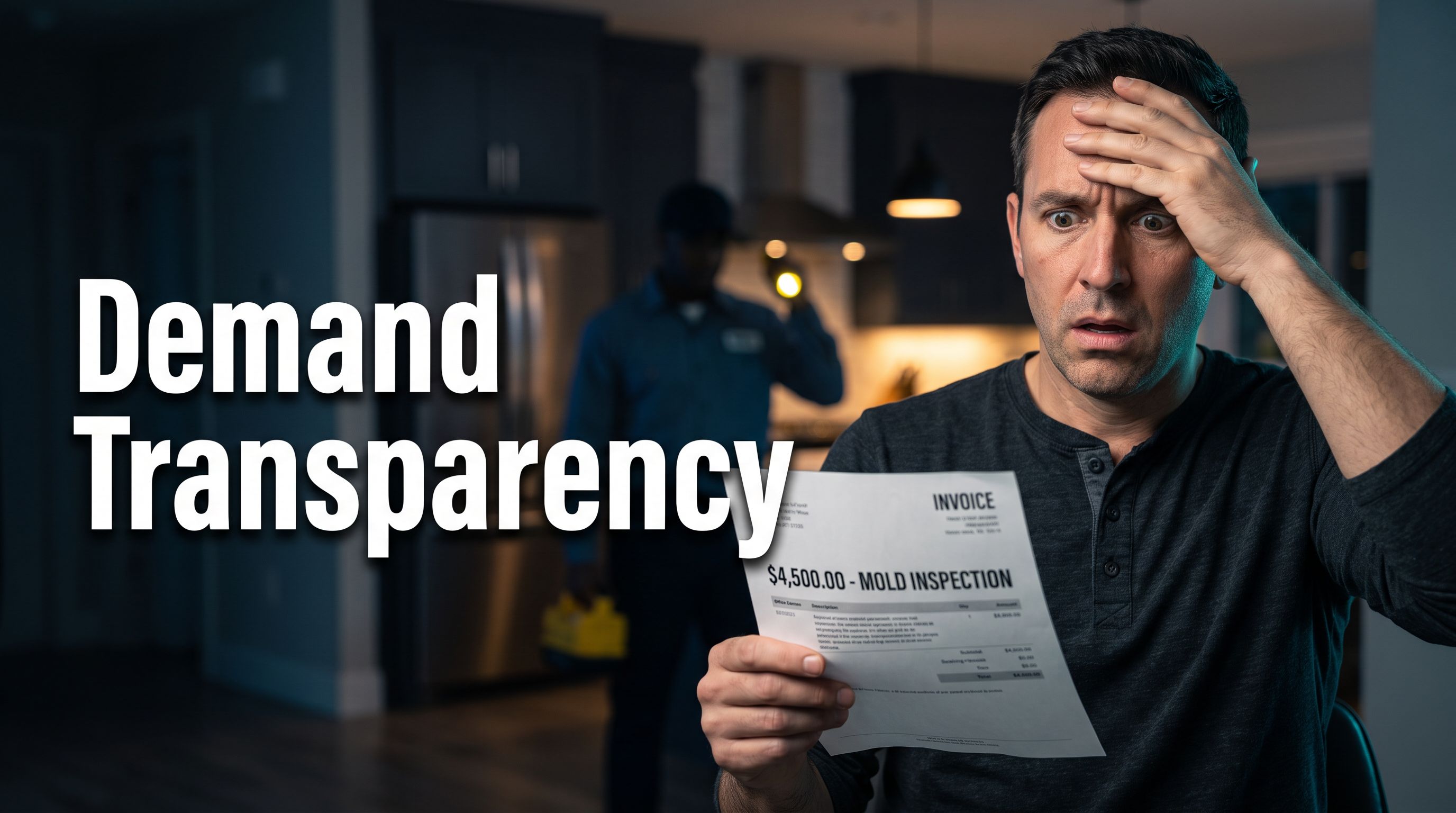
Discovering mold in your home or commercial property is a stressful experience that immediately raises concerns about human health and property value. When you suspect a mold issue, your first instinct is often to find a quick solution. Unfortunately, the mold remediation industry is fraught with predatory contractors who prey on this exact fear and urgency. Property owners frequently find themselves paying thousands of dollars for unnecessary repairs based on guesswork and sensationalized findings.
To protect your sanctuary, your family, or your tenants, you must shift from an emotion-driven reaction to a data-driven approach. You need empirical evidence to validate your concerns, not the subjective opinion of a contractor looking for their next big payday. Securing a high-quality mold test without getting ripped off requires understanding the technology used, the credentials of the inspector, and the critical importance of unbiased reporting.
This comprehensive, step-by-step guide will walk you through exactly how to navigate the mold inspection process. By demanding advanced detection technologies and insisting on independent, data-backed analysis, you can achieve peace of mind. Let us explore how you can secure accurate answers, protect your health, and preserve your property's value without falling victim to industry scams.
Prerequisites: What You Need Before Hiring an Inspector
Before you even pick up the phone to hire a professional, it is vital to prepare yourself. Entering the process with the right mindset and information will instantly separate you from vulnerable consumers who are easily taken advantage of by dishonest contractors.
Here are the critical prerequisites you need before scheduling a mold inspection:
-
A Clear List of Trigger Events: Document exactly why you suspect a mold problem. Note specific musty odors, the timeline of recent water leaks, visible discoloration on walls, or unexplained allergy symptoms experienced by occupants.
-
A Mold Inspector Vetting Checklist: Prepare a list of questions to ask over the phone. You need to verify their testing methods, turnaround times, and whether they have financial ties to remediation companies.
-
A Skeptical, Data-Driven Mindset: Commit to evaluating empirical evidence over contractor guesswork. You are looking for scientific proof—such as air quality metrics and thermal heat maps—to justify any future structural work.
Step 1: Avoid the "Conflict of Interest" Trap
The single most common way consumers get ripped off in the mold industry is by hiring the same company to test for mold and then remove it. This creates an immediate and dangerous financial incentive. If the company performing the inspection only makes money when they find a problem, they are highly motivated to discover issues that may not actually exist or to exaggerate minor surface mold into catastrophic emergencies.
This scenario is the textbook definition of a conflict of interest mold inspection. Unscrupulous contractors may use scare tactics, claiming your home is highly toxic, just to secure a lucrative remediation contract. To learn how to avoid mold testing scams, your first rule must be to hire an inspection-only service. The professional diagnosing the disease should never be the one selling you the cure.
ProDetect Mold Inspection was established in 2000 to address this exact issue in the industry. With over 24 years of experience, ProDetect maintains a strict policy against accepting kickbacks from affiliated remediation organizations. By focusing exclusively on unbiased mold inspection services, they ensure that every client report is completely transparent, trustworthy, and focused entirely on the facts. When your inspector has no financial stake in the demolition or repair of your property, you can trust that their findings represent the hard truth.
Step 2: Don't Pay for a "Flashlight Inspection"—Demand Advanced Technology
Many property owners unknowingly pay hundreds of dollars for what industry insiders call a "flashlight inspection." This occurs when an inspector simply walks through the property, shines a flashlight in dark corners, looks under the sink, and makes an educated guess based on visual cues. Visual assessments are entirely inadequate because mold is often a symptom of a hidden problem lurking behind drywall, under floorboards, or within complex HVAC systems.
To properly protect your asset, you must demand a tech-enabled inspection. Advanced technology takes the guesswork out of the equation. Professionals should utilize thermal imaging mold detection to identify temperature anomalies that indicate hidden moisture pockets inside your walls. When paired with advanced moisture meters, highly trained inspectors can map out the exact borders of water intrusion without tearing down a single piece of drywall or causing unnecessary property damage.
Identifying the root cause of moisture intrusion is critical for long-term asset preservation. According to the EPA guidelines on moisture control, the only way to control indoor mold growth is to control moisture. If an inspector only tells you that mold is present but cannot empirically prove where the water is coming from, the mold will inevitably return. High-quality inspections prioritize locating the hidden leak so you can fix the source of the problem before it causes structural rot or severe real estate devaluation.
Step 3: Insist on Lab-Grade Indoor Air Quality (IAQ) Testing
When property owners try to save money, they often turn to cheap hardware store testing kits. However, understanding the difference between an accurate mold test vs diy kit is crucial for your health and your wallet. DIY kits typically rely on settling plates that only catch heavy spores falling from the air. They are notoriously unreliable, easily contaminated by user error, and do not provide the precise concentration levels needed to assess human health risks accurately.
Instead, you must insist on a professional indoor air quality mold test. Professional inspectors use calibrated mechanical air pumps that draw in a specific volume of air over a set period of time. This scientific method captures hidden, microscopic spores that remain suspended in the air—the exact spores you and your family are breathing into your lungs. By analyzing these samples in an accredited laboratory, professionals can identify the exact genus of mold and its concentration per cubic meter.
This lab-grade data is essential for health validation. If you or your tenants are experiencing headaches, respiratory issues, or chronic allergies, specific indoor air quality (IAQ) metrics can correlate these physical symptoms with environmental contamination. ProDetect Mold Inspection utilizes advanced detection technologies capable of identifying more than 50 mold types with an impressive 99.8% accuracy rate. This level of precision provides the empirical evidence necessary to calm your fears and make informed, data-driven decisions about your property.
Step 4: Require a Bulletproof, Actionable Report
A high-quality mold test is only as good as the documentation provided afterward. You should never accept a handwritten note, a vague email, or a simple verbal summary of the findings. You require a final deliverable that is detailed enough for an insurance adjuster to approve a claim, but clear enough for a layman to fully comprehend.
The anatomy of a bulletproof mold report includes highly specific data points: photographic evidence of the inspection, thermal heat maps, precise moisture meter readings, lab-certified spore counts, and a clear glossary of the mold types identified. This legally and technically sound document is your primary tool for action. Whether you need a mold inspection for insurance claim purposes, to hold a negligent landlord accountable, or to provide a precise blueprint for a remediation crew, this comprehensive report is your shield.
Furthermore, the report must include clear, actionable remediation guidance. It should outline exactly what materials need to be removed, what surfaces can be cleaned, and how the underlying moisture source must be repaired. Importantly, this guidance should be non-sensationalized. A reputable company like ProDetect Mold Inspection will give you the hard truth without sugarcoating it, but they will also refrain from causing unnecessary panic, ensuring you only pay for the remediation work that is absolutely necessary.
Common Mistakes to Avoid
Even well-intentioned property owners can make costly missteps when trying to resolve a mold issue quickly. Be vigilant, trust the data, and actively avoid these common pitfalls:
-
Falling for "Free Inspection" Offers: If a contractor offers to test your home for free, you are likely walking into a bait-and-switch trap. These free assessments are almost always a high-pressure sales pitch for expensive, unnecessary remediation work. Remember, you get what you pay for, and unbiased data is worth the investment.
-
Ignoring the Root Cause of the Moisture: Treating mold without fixing the leak is like putting a bucket under a dripping roof and calling it repaired. Testing for mold without utilizing thermal imaging to find the hidden water source guarantees that the mold will return, leading to further asset devaluation and repeated expenses.
-
Settling for Slow Lab Results: When dealing with active water damage or acute health issues, you have zero tolerance for delays. Waiting weeks for lab results allows mold to spread and structural damage to worsen. Always demand a 24-hour rapid response and fast lab turnaround times to ensure immediate action can be taken to protect your property.
Conclusion
Protecting your property and the health of its occupants requires moving past emotional reactions and relying on empirical, scientific data. By avoiding conflicts of interest, demanding advanced thermal imaging technology, insisting on lab-grade air quality testing, and requiring bulletproof documentation, you can confidently navigate the mold inspection process. Finding reliable, independent mold testing near me is the most effective way to protect both your health and your wallet from predatory industry practices.
Do not leave your sanctuary to guesswork or risk your financial security on a simple flashlight inspection. Trust the experts at ProDetect Mold Inspection, who have completed over 200,000 inspections with a proven 99.8% accuracy rate. Operating in over 170 locations across the United States, they provide rapid responses, unbiased reporting, and a 100% customer satisfaction guarantee.
Take control of your indoor air quality and protect your property value today. Visit https://www.prodetectmold.com, call 833-659-3463, or email hello@prodetectmold.com to schedule your professional, tech-enabled mold inspection.