Health & Safety
Mold Inspection Cost: Is $2,000+ Fair? Expert Guide
Quoted $2,000-$2,500 for a mold inspection? Typical costs run $300-$800. Learn when higher prices are justified and how to audit any quote line by line.
In this article
Is $2,000-$2,500 Too Much for a Mold Inspection? A No-Nonsense Guide to Paying for Inspection Without Remediation
Picture this: you're staring at a quote for $2,000 to $2,500 for a mold inspection. You've already searched online and seen numbers closer to $300 or $400. Now you're wondering if you're getting played, and meanwhile there's a musty smell in the basement, a kid who keeps sneezing, or a tenant who won't stop complaining about headaches. Nobody wants to overpay, but nobody wants to skip the test either, especially when health is on the line.
This guide gives you a straight answer. We'll walk through when a price like this makes sense, when it doesn't, and how to audit any inspection-only quote line by line so you can judge it for yourself instead of relying on gut feelings or sales pitches.
The Short Answer: Is $2,000-$2,500 Reasonable?
Typical residential mold inspections usually land somewhere around $300 to $800, depending on the size of the home, how many samples get taken, and whether lab testing is included. That means a $2,000-$2,500 price for an inspection alone sits at the high end of the market, not in the normal range for a standard single-family house.
That said, the honest position is that the number can be reasonable for certain properties and scopes. A large commercial building, a multi-unit property, or a home with a complicated hidden water problem can require far more time, equipment, and lab work than a quick visual check. A high price for that kind of job isn't automatically a rip-off. It's only fair if the work behind it is clearly defined.
The price alone doesn't settle the question. What really determines value is the scope of work, the sampling plan, and how deep the final report goes. Before you accept any inspection-only quote, ask yourself three things: what exactly is included, how the testing will be done, and what the report will actually let you do next.
When a $2,000-$2,500 Inspection Price Is Justified
Size and complexity are the biggest reasons a higher price makes sense. If you're dealing with a multi-building property, a large apartment complex, or a commercial space spread across several floors, moisture mapping and sampling multiply quickly. Every unit, floor, or structure may need its own readings, samples, and documentation. Pricing that reflects that effort is reasonable.
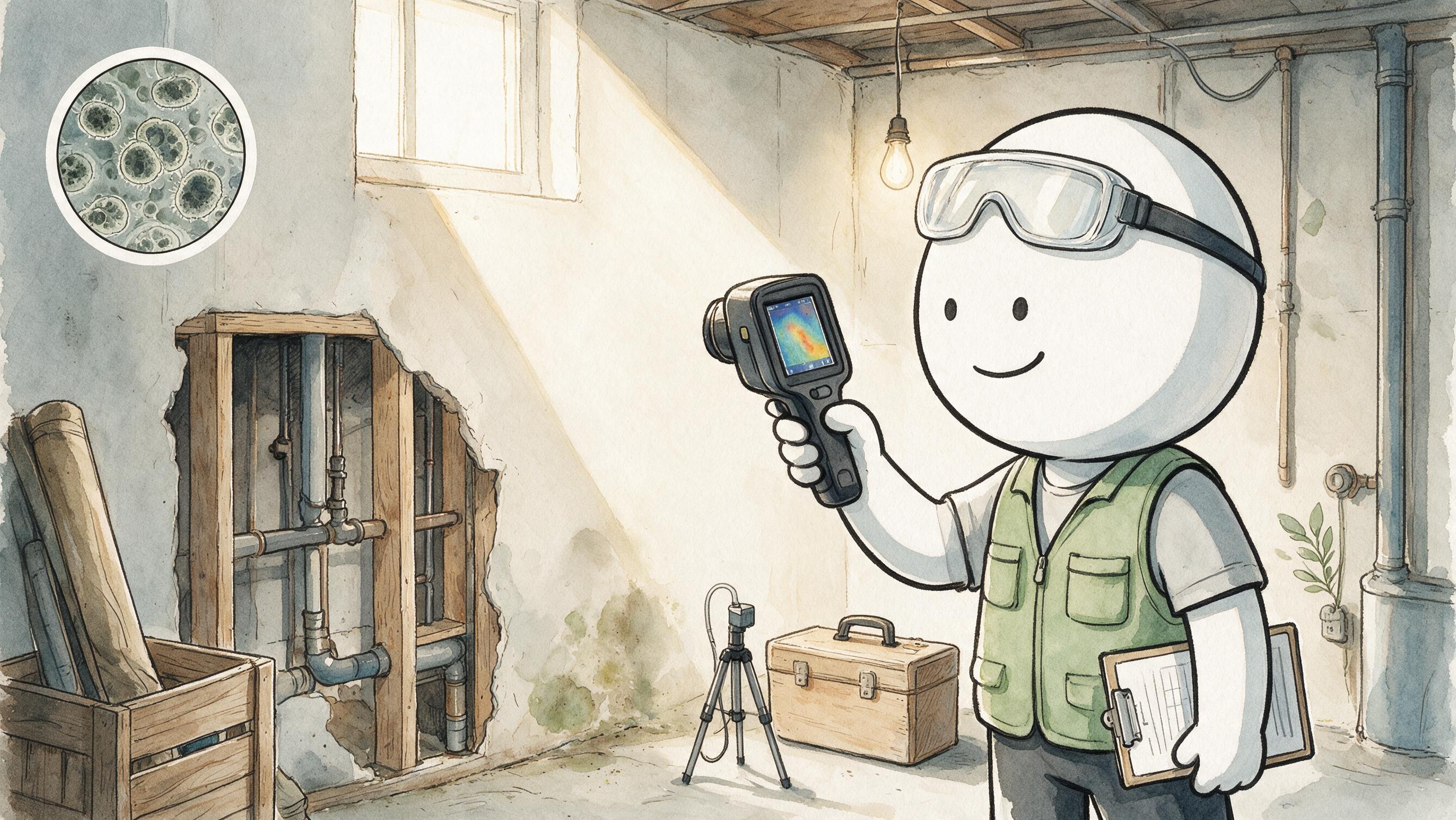
Forensic root-cause work is another legitimate reason. Sometimes the mold isn't the real problem; the water is. If a technician has to trace a leak behind walls, under a slab, or through a crawl space, that takes time and specialized tools. Thermal imaging and moisture meters are not cheap to operate, and the skill to read the results is worth paying for.
Lab-intensive sampling also drives cost up. Multiple air samples, surface samples, control samples, and detailed identification of mold types all add lab fees and analysis time. If the quote clearly lists a large number of samples sent to an accredited lab, the price starts to make sense.
Finally, expert-level reports can justify a higher fee. If you need a document that an insurance adjuster, a lawyer, or a remediation contractor can rely on, the report has to be thorough, technically sound, and well-organized. That level of documentation takes real work, and it can be worth far more than the inspection fee if it helps you win a claim or resolve a landlord dispute.
When the Price Is Too High (and What to Do Instead)
A standard single-family home with a visual assessment, a handful of targeted samples, and a basic written summary rarely justifies premium pricing. If the quote is $2,000 or more for that kind of job, it's worth pushing back. You're paying for a simple visit, not a forensic investigation.
Watch for red flags. Quotes that bundle vague testing with unexplained fees are a warning sign, especially if the provider can't tell you how many samples they'll take or which lab they'll use. Be cautious when prices jump without a clear list of what's included. If you can't tell what you're paying for, you can't judge whether it's fair.
It's also important to remember that a higher quote isn't automatic proof of quality, and a lower quote isn't automatic proof of poor work. A cheap inspection can be thorough, and an expensive one can be padded. The real test is comparing deliverables: what photos, readings, sample locations, lab results, and written guidance you'll receive for each price.
Before committing, get a second itemized quote and ask the provider to explain the scope in plain language. If they can't or won't, that tells you something useful about how they'll communicate once the job is underway.
Inspection-Only vs. Remediation: Why Separating Them Saves Money
Inspection and remediation are two different jobs. An inspection identifies whether mold is present, what type it might be, where it's located, and what's causing the moisture that feeds it. Remediation is the physical cleanup and repair work: removing contaminated materials, drying out structures, and fixing the leak or ventilation problem. Many quotes blur these two together, and that blurring is a big reason people feel confused about pricing.
There's also a conflict of interest to consider. When the same company finds the problem and sells the fix, the incentive to over-scope remediation can grow. That doesn't mean every contractor is dishonest, but it does mean the person writing the report has a financial stake in the answer. That's why many property owners prefer an unbiased, inspection-only report. ProDetect Mold Inspection focuses on inspection only and does not perform remediation, so its reports aren't tied to selling a cleanup job.
An independent inspection can also save you real money by identifying the true moisture source. If the report shows a slow leak behind a bathroom wall, your remediation budget can go toward fixing the leak rather than scrubbing surface growth that will simply return. Treating symptoms without finding the cause is one of the most expensive mistakes property owners make.
A clear, unbiased report helps when you're collecting remediation bids, too. When every contractor is pricing the same defined scope, the bids become easier to compare. Without that clarity, you may end up comparing apples to oranges and paying for work you don't need.
How to Audit a Mold Inspection Quote Line by Line
Start by checking for the core line items. A solid inspection quote should mention a visual inspection, moisture mapping with moisture meters, thermal imaging where it's relevant, air sampling, surface sampling, lab analysis fees, and the written report. If any of these are missing or vaguely described, ask why.
Next, look at the sampling plan. Ask how many samples are included, where they'll be taken, and whether control samples are part of the plan. Control samples taken outdoors or in unaffected areas give you a baseline to compare against. Also ask whether lab fees are itemized or buried in a single bundled number. Transparency here is a good sign.
Then confirm what the report will contain. You should expect photos, moisture readings, thermal images where used, sample locations, lab results, and remediation guidance. The guidance should be written in plain language that a non-expert can follow, even if the underlying data is technical. A report that only an engineer can understand isn't very useful when you're trying to make decisions at the kitchen table.
Finally, verify the documentation value. Ask whether the report is detailed enough for an insurance adjuster, a landlord dispute, or a remediation crew. Ask the provider to explain their methods in simple terms. If they struggle to do that before you've paid, it's likely to get harder after.
Before you pay, ask a few more questions. What's excluded from the quote? How long will lab results take? Is a follow-up visit included if questions come up? And does the company perform any remediation work that could create a conflict of interest? Clear answers to these questions go a long way toward building trust.
A Decision Guide: Premium Testing, Second Quote, or Expert Escalation
Pay for premium testing when symptoms are persistent, the property is large or complex, there's evidence of hidden water damage, or the report will be used in an insurance or legal matter. In these situations, the extra detail can prevent costly mistakes and give you data you can actually act on.
Choose a basic inspection when the source is obvious, the area is small, and your goal is a quick visual confirmation with limited sampling. If you can already see a leak under the sink and the stain is small, you probably don't need a full forensic package.
Get a second quote when the scope is unclear, the price gap between providers is large, or the first provider is also offering remediation. A second opinion helps you spot outliers and gives you a clearer sense of what the market looks like for your specific property.
Consider escalating to an industrial hygienist for complex health questions, disputed results, or large commercial projects that need specialist expertise. A hygienist can interpret findings in a broader health and workplace context, which is valuable when the stakes are high.
If you're trying to decide quickly, here's a simple checklist: Are symptoms ongoing? Is the property large or hard to access? Is there evidence of hidden moisture? Will the report go to an adjuster or lawyer? If you answered yes to two or more, premium testing is probably worth the cost. If not, a basic inspection with a clear scope may be enough.
The Bottom Line and Your Next Step
A $2,000-$2,500 price for a mold inspection without remediation can be reasonable for large, complex, lab-heavy, or documentation-driven jobs, but it should be justified line by line. For a typical home, it's usually at the high end, so ask hard questions before accepting it. Your best tools are a clear scope, a transparent sampling plan, and a report you can actually use.
If you want to see what a thorough inspection looks like before you commit, download our quote-checklist and review a sample report. Both show the kinds of details you should expect, from moisture readings and thermal images to sample locations and plain-language guidance.
When you're ready for an unbiased, inspection-only assessment, contact ProDetect Mold Inspection at 833-659-3463, email hello@prodetectmold.com, or visit https://www.prodetectmold.com.